Hammerex Guide
Why More Electricians Are Moving Away From Traditional Tool Bags
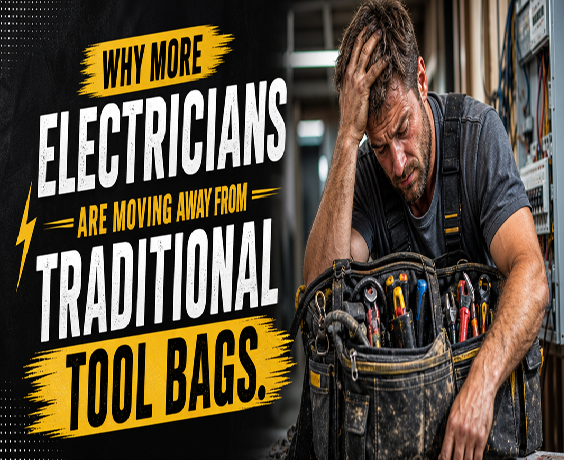
Every electrician knows the feeling - halfway through a job, half the tools are on the floor, the tape is buried in the bag, and the screwdriver has walked off. This is not a tool problem. It is a carry problem - and it is the quiet reason a growing number of pro sparks are moving away from tool bags towards side-mounted belt slides.
# Why More Electricians Are Moving Away From Traditional Tool Bags
Every electrician knows the feeling.
You are halfway through a second-fix.
You reach for your insulation tape - it is somewhere in the tool bag.
Your side cutters are sitting on the floor behind you.
The cable clips are in one pocket. The screwdriver you had ten seconds ago has just walked off.
Nothing kills productivity faster than the daily scavenger hunt for tools that should always be in the same place.
This is not really a tool problem. It is a carry problem. And it is the quiet reason a growing number of professional electricians are moving away from traditional tool bags and towards compact side-mounted belt slide pouches.
Not because they want to carry more.
Because they want to carry the right tools, in the right place, every single time.
The Hidden Productivity Tax Of A Disorganised Bag
Take a normal working day apart and look at it.
How many times do you reach for the same five or six tools? Tape measure. Insulation tape. Side cutters. Screwdriver. Stripper. Marker pen. Probably forty to sixty times in an eight-hour day. Possibly more.
Now imagine each of those movements costs you five extra seconds because the tool is buried in the bottom of a tool bag, or sitting on a sub-floor twenty feet away, or hidden in a coat pocket from yesterday.
Five seconds. Sixty times. Just for tool retrieval.
That is half an hour of your working day spent not working - every job, every day, every week.
A tool bag is not a bad piece of equipment. It is a brilliant piece of equipment for transport. The issue is that most electricians end up using their tool bag as their working carry as well. And the two jobs are completely different.
Transport favours capacity.
Work favours access.
A bag is built for one. A belt slide is built for the other.
Carrying Tools Vs Working Efficiently
There is a difference between owning a lot of tools and having them where you need them.
Most electricians do not need every tool they own every minute of the day. The challenge is not the size of the toolkit. The challenge is having the four to six tools you use the most within immediate reach - and not having the other forty getting in the way.
A well-set-up belt slide gives you the working set.
The tool bag (back in the van or by the kit) holds the rest.
Two systems doing two jobs. Far more efficient than one system trying to do both.
The Working Zone
Stand still in a working position for thirty seconds.
Now extend both hands out, palms forward. The space you can reach without taking a step is your working zone.
Anything inside it is a tool.
Anything outside it is a delay.
A side-mounted pouch puts the most-used tools directly into the working zone, on your hip, at the natural drop of the hand. Reaching becomes automatic. You stop thinking about retrieving a tool because the tool is already where the hand naturally falls.
That sounds small. But it is the difference between a tradesman who finishes a board at 4pm and one still chasing tools at 5.
Tool Position: Why It Matters More Than People Think
Apprentices often think the question is which tool.
Veterans know the question is where.
When a tape measure lives in the same place every day, you stop thinking about where it is. Hand goes, hand returns, you keep working.
When insulation tape always sits in the same holder, grabbing it becomes automatic.
When side cutters always return to the same pocket, you are never searching.
Good organisation reduces mental clutter. Instead of focusing on where the tool is, you focus on the job in front of you.
That is where productivity actually comes from. Not from bigger toolkits. From smaller decisions, made once, then automated by habit. (We have written a fuller piece on this idea over in The Trade Starts With Respect for anyone interested in the wider mindset.)
What Should Actually Live On The Belt Slide
This is where most electricians get it wrong on day one.
The temptation is to load everything onto the belt and treat it like a portable tool bag. That is the worst possible use of it.
The rule of thumb: only what you reach for at least ten times a day.
For most electricians, that means:
- Insulation tape (the most-used item by a mile)
- Tape measure
- Side cutters / pliers
- A screwdriver or two (terminal driver plus electrical screwdriver)
- Cable clips for whatever you are running
- A marker pen
- Sometimes a small hammer
The strippers, the multimeter, the test kit, the spare blades, the larger pliers, the second screwdriver set, the meter clamps, the rolls of cable - those stay in the bag. They are tools you grab once or twice a job, not constantly.
The belt slide is not a smaller tool bag. It is a different category of equipment entirely.
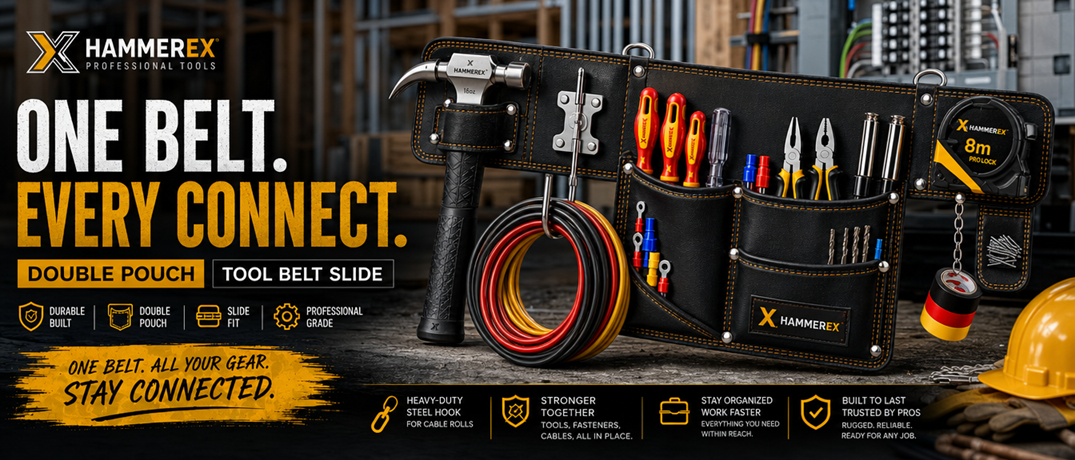
The Cable Hook
Anyone running cable knows how often the spool has to be managed during a job. Holding it. Setting it down. Looping it. Carrying off-cuts. Repeating constantly.
A dedicated cable hook on the pouch turns a two-hand job into a one-hand job. You move with the cable instead of fighting it.
It is one of those small details that seems trivial until you have worked a day with one. After that, working without it feels like working with one hand tied behind your back.
Insulation Tape - The Most-Reached-For Item
Walk onto an electrical job and watch the tradesman for ten minutes.
The tool reached for most often is almost never the meter, the cutters, or the screwdriver. It is the insulation tape.
It gets used dozens of times a day. Wrapping ends. Marking connections. Holding things temporarily. Labelling. Bundling. Bridging.
And yet it routinely ends up buried in the bottom of a tool bag, loose in a coat pocket, or rolling around in the back of the van where it picks up enough dust to look like archaeological evidence by Friday.
A dedicated tape holder solves that one problem properly. No digging, no searching, no wasted seconds. When something is used that often, accessibility is not a nice-to-have. It is the entire point.
Tape Measure Access Without The Pocket Battle
Most electricians clip a tape measure to a pocket. It works - until that pocket is already carrying a marker pen, a roll of solder, a roll of tape, and the trim from the last face plate.
A dedicated tape measure position keeps it secured but ready. Hand drops, tape is there. No fishing through pockets, no balancing the tape on a ladder rung, no leaving it on the windowsill where it is now forever.
Small detail. Real difference.
The Hammer Holder
Electrical work is not just wiring.
It is fixings. Cable clips. Mounting boxes. Patching brick. General site work that does not pause just because the trade is technically electrical.
A small claw hammer earns its place on most electrical jobs. The problem is that it does not naturally live in a pocket - it bounces, it weighs the slide on one side, it clatters around like a one-man band.
A dedicated hammer position keeps the weight balanced and stops tools competing for the same pocket. Practical, not flashy. Most pros do not notice it is solving a problem until they go a day without one.
The Magnetic Flap
Small electrical components have an extraordinary talent for disappearing.
Screws. Bits. Connectors. Small ferrules. The grub screw from the back of a switch.
The moment any of them hits the floor on a job site, you lose more time finding them than you saved tightening them.
A magnetic flap on the pouch gives you a temporary parking spot for everything small. Drop the screws on the magnet while you wire the back of the socket. They are still there when you turn around - instead of somewhere underneath the floorboards.
This matters most when you are working at height, in lofts, in ceilings, under floors, or in confined spaces. The places where dropping a screw is not annoying - it is a thirty-minute hunt.
Single Pouch Vs Double Pouch - Picking The Right One
This is where Hammerex makes two different belt slides for a reason.
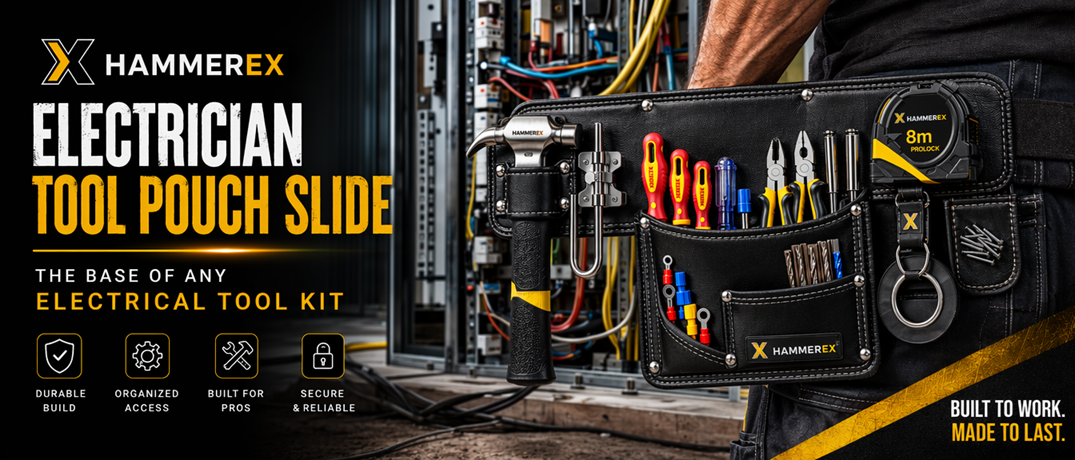
The [Electrician Single Pouch Belt Slide](/product/electrician-single-pouch-belt-slide) is the lighter option. One main pouch, tape measure clip, cable hook, magnetic flap. Best for second-fix work, finishing work, fault-finding, service callouts - anywhere the toolkit is focused and the day is mobile.
The [Electrician Double Pouch Belt Slide](/product/electrician-double-pouch-belt-slide) doubles up the storage. Two main pouches, more capacity for cable clips and fixings, room for a wider set of drivers and pliers. Best for first-fix runs, panel work, and longer days on a single setup where you carry more and need it organised.
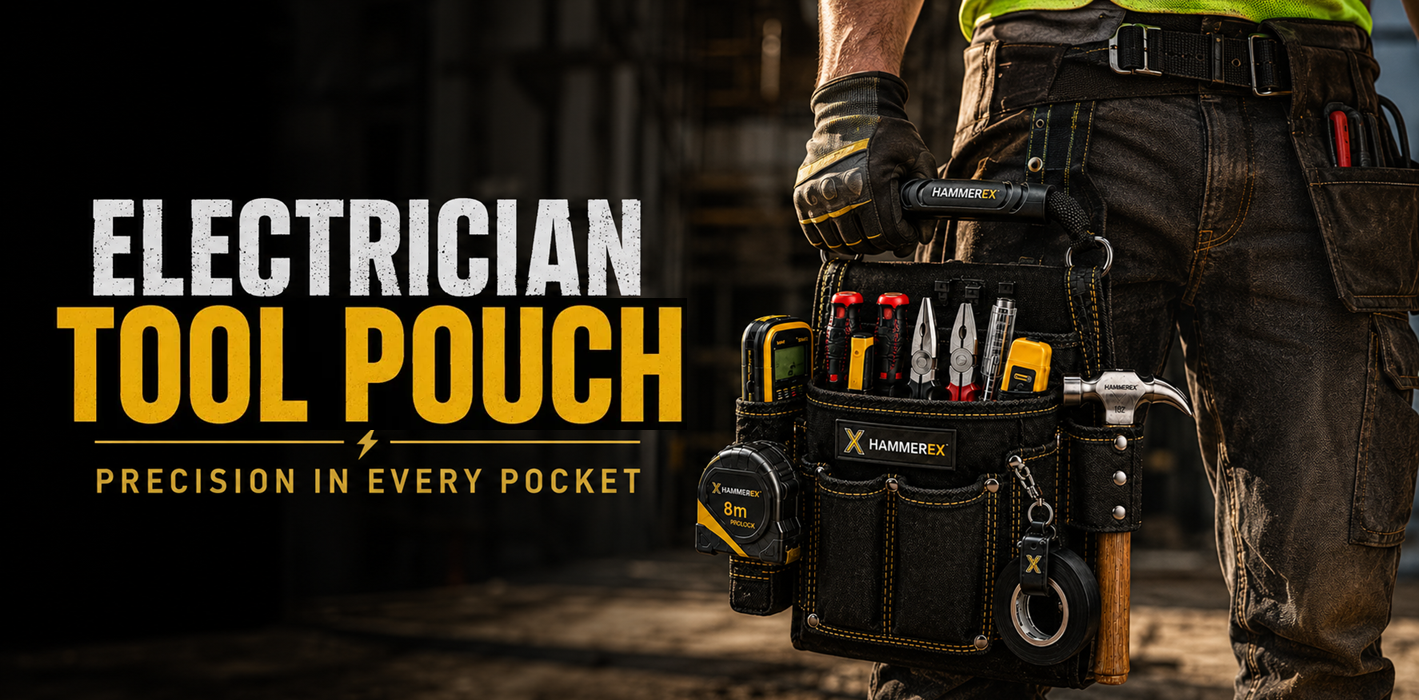
The [Electrician Pro Pouch](/product/electrician-pro-pouch) sits above both - a fuller carry for sparks who want the full belt-mounted setup with hammer holder, tape, drivers and the lot in one piece.
The honest advice: if you do not know which one is right, start with the single. It is hard to overload, easy to live with, and most electricians end up using a single anyway even when they own the double.
Comfort And Weight Distribution
The best work pouch is one you eventually stop noticing.
That is the highest compliment any tool-carrying system can receive. If you finish a ten-hour day and your hip is sore, the belt is wrong. If you finish a ten-hour day and you have forgotten you were wearing it, the belt is right.
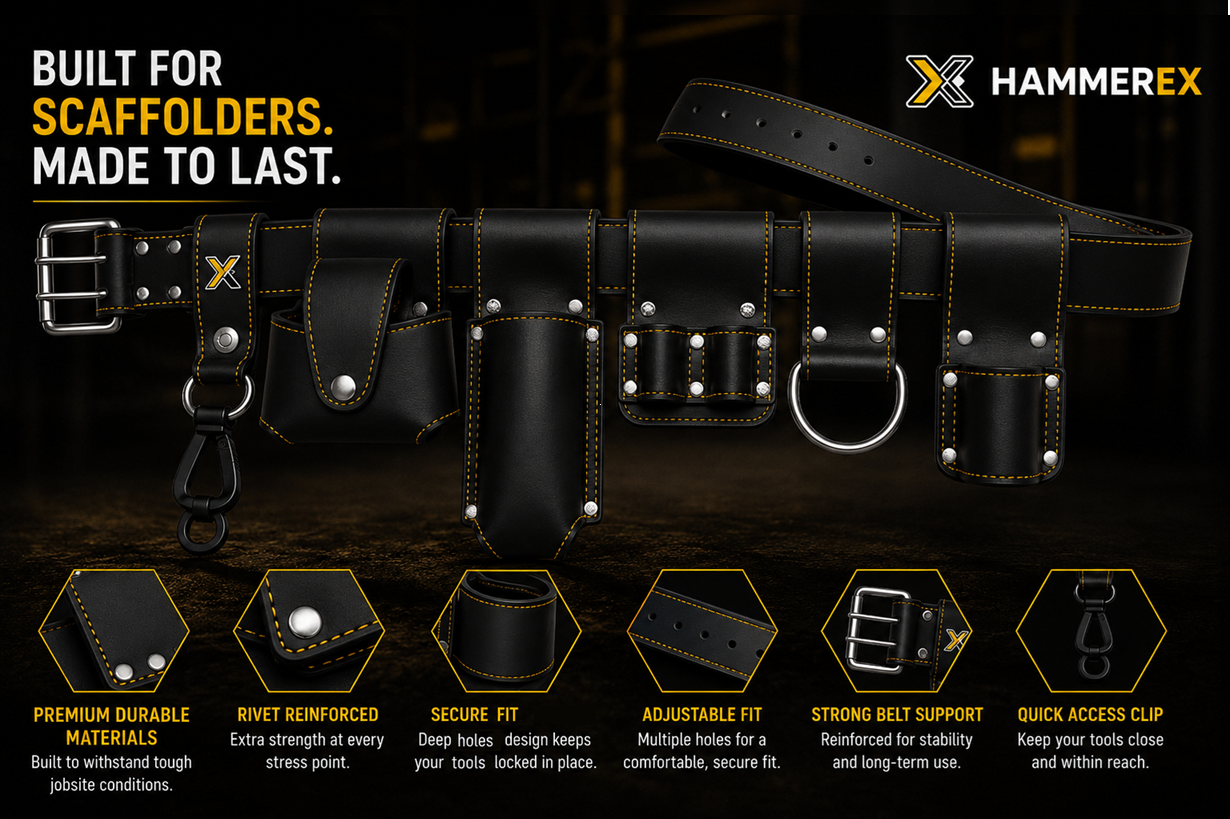
A belt slide distributes weight directly through the hip - the same way a builder's belt or a scaffolders setup does. The key difference from a tool bag is that the weight is on the bone, not on the shoulder. Shoulders compress over a working life. Hips can take it indefinitely.
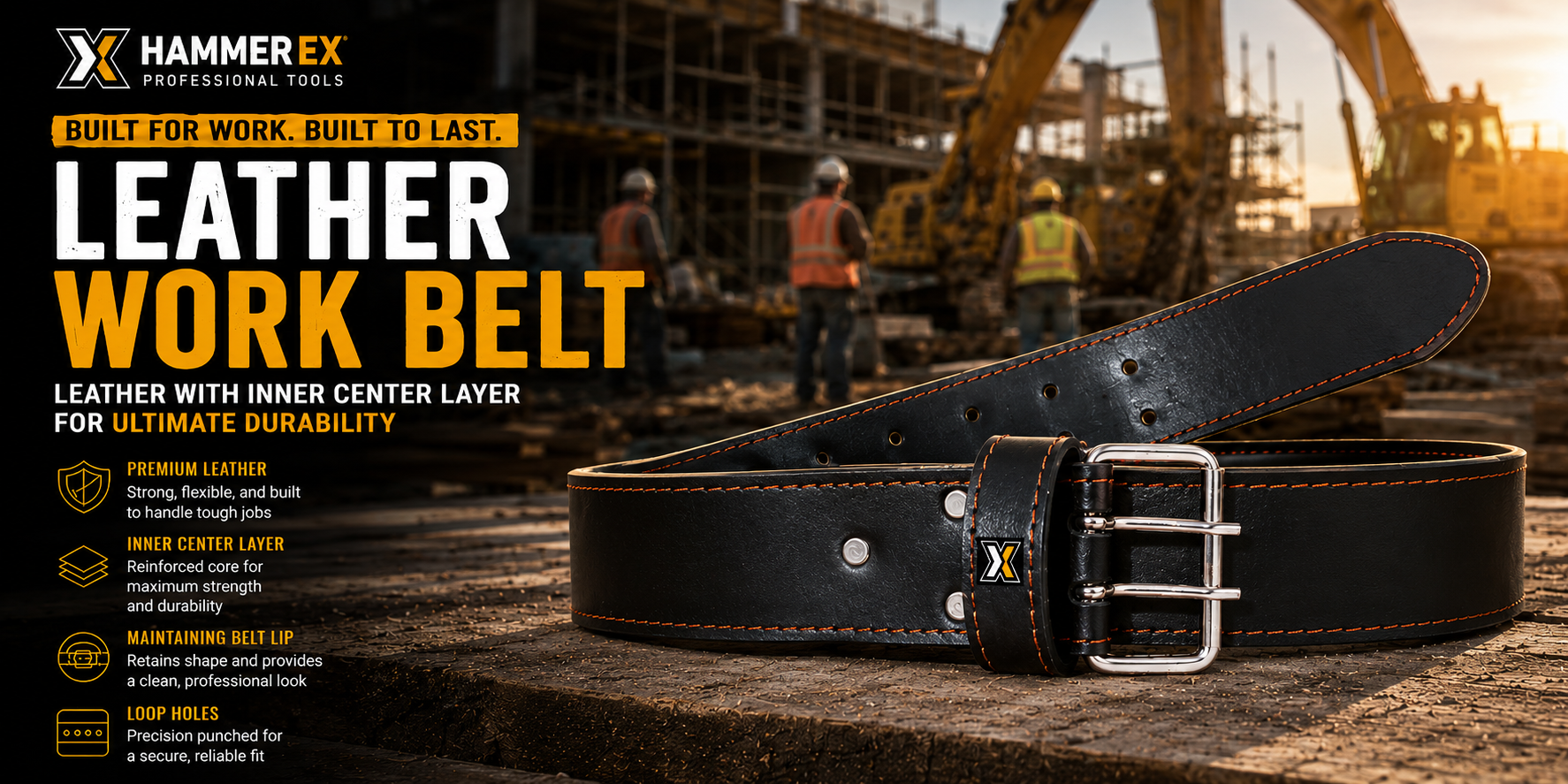
And because the slide goes onto a standard 2-inch trade belt - like the Hammerex 2" Heavy Duty Leather Work Belt - setup is simple. No harnesses, no straps, no rigging. Slide it on. Get to work.
How To Switch From Bag To Pouch
If you have always worked from a tool bag, switching feels strange for the first week. Two practical tips:
1. Strip the loadout right back at the start. Resist putting everything in. Carry just the tape, tape measure, cutters, and one screwdriver for a day. You will be surprised how much of the work you finish without touching the bag. Add tools only when you reach for them and find them missing.
2. Keep the bag. Belt slides do not replace tool bags. They replace the working layer of the tool bag. The bag still holds the test kit, the spares, the heavier hand tools, the bigger items. The slide just stops you returning to it forty times a day.
A week in, most sparks would not go back.
A Word From The Workshop
Hammerex has been part of the UK electrical trade for fifteen years. Sparks have always been the trade that buys carry equipment most carefully - partly because the work is precise, partly because the day is long, partly because the kit is expensive enough to lose sleep over.
What we hear back from electricians on the tools is consistent: it is not the most equipment that wins. It is the right equipment, in the right place, every time.
That is the entire argument for moving from a tool bag to a belt slide. Less, but better placed.
When A Tool Bag Still Wins
This article is not a case against tool bags. It is a case against using a tool bag for the wrong job.
Tool bags still win for:
- Transport between van and site
- Storing the full toolkit organised
- Carrying first-fix bulk - spools, conduit, larger drivers, test kit
- Apprentice-grade general carry where access is less time-critical
- Long-term storage in the van
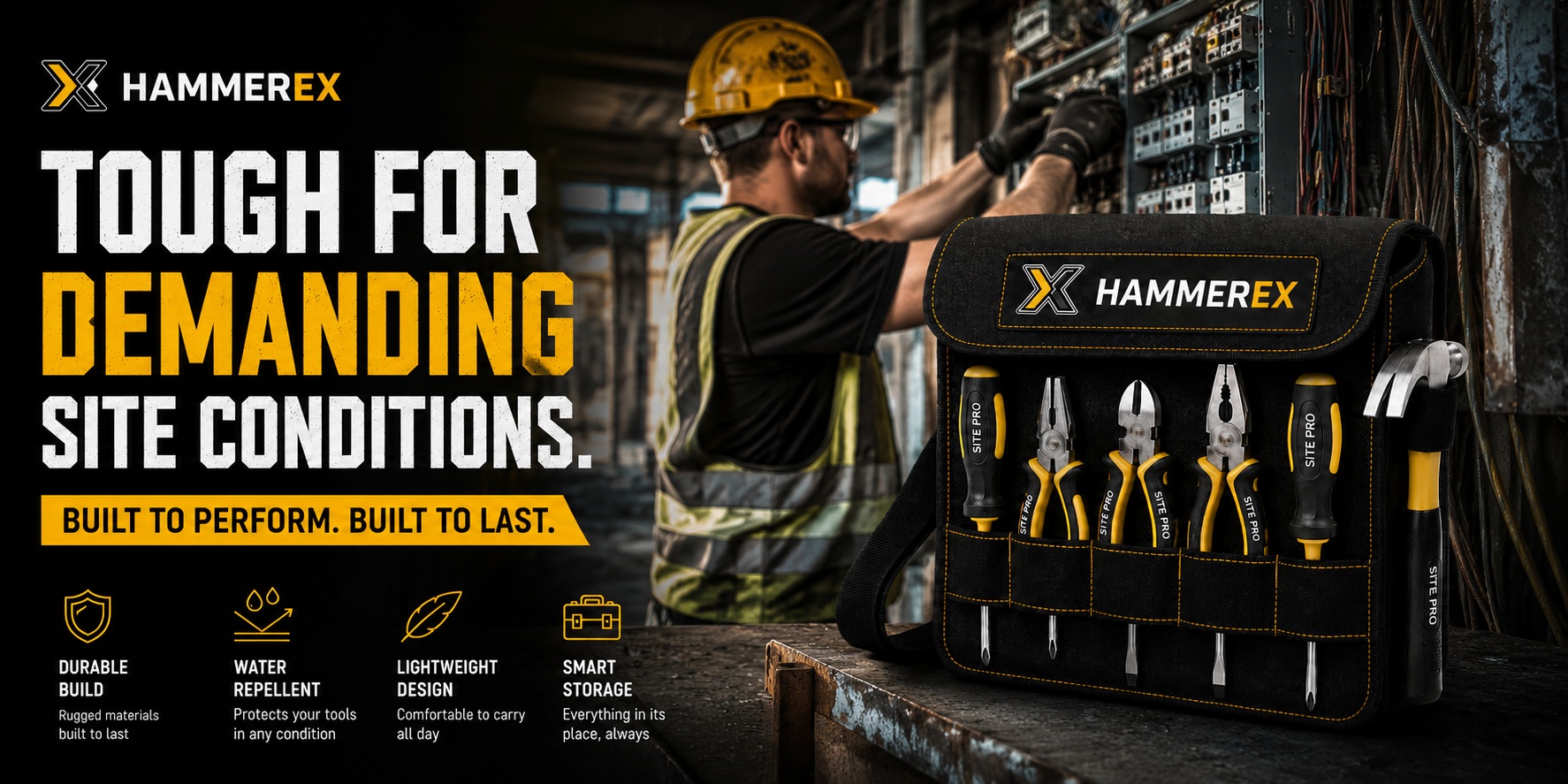
For all of that, a proper electrician's bag - like the Hammerex Electrician Sling Bag - is the right answer.
The belt slide does not replace it. They work together.
The Real Question
The shift in the trade is not really bag vs pouch. It is transport vs working.
For decades, electricians used one piece of equipment to do both jobs because there was no obvious alternative. Today there is. Belt slides separate the working layer from the transport layer - and let each piece of equipment do what it is actually good at.
The result is not just faster jobs. It is less tiredness, less frustration, fewer lost components, fewer pockets stuffed with the wrong things, and fewer moments of standing on a stepladder muttering where is my tape.
For an electrician who runs a full week of work, that is not a marginal improvement.
That is the whole game.
So - bag or pouch?
If we are being honest, the answer is both. But the days of a single tool bag doing the entire job for a working electrician are quietly coming to an end.
The next generation of sparks is already proving it.