Hammerex Guide
The Trade Starts With Respect: Why Looking After Your Tools Matters
The habit of looking after your tools used to be passed down through the trades. Today it is disappearing. Here is why it still matters - and why the pride you take in your tools is the same pride you bring to the finish.
# The Trade Starts With Respect: Why Looking After Your Tools Matters
One lesson that used to be passed down through the trades was simple:
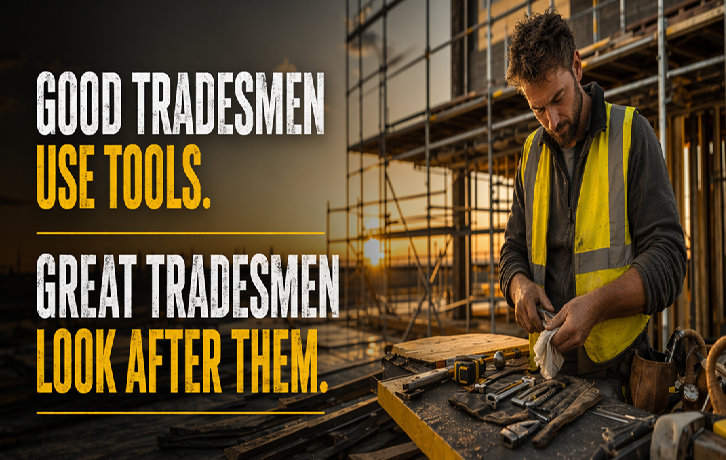
Look after your tools.
It did not matter if the working day was finished, the rest of the lads were already heading home, or you were the last person left on site. The job was not finished until the tools were cleaned, stored properly, and ready for tomorrow.
For many tradesmen, that habit seems to be disappearing.
> The standard you set for your tools becomes the standard you set for your work.
It Starts With Discipline
Most people think organisation is about protecting equipment.
Partly, that is true.
A properly stored tool is less likely to be damaged, lost, or worn out before its time. That is common sense.
But the real value runs deeper.
When you build the habit of looking after your tools, you are teaching yourself discipline. You are setting standards that carry through every part of your work.
The simple act of putting a tool back where it belongs tells your brain that details matter.
And in construction, details are everything.
Your Tools Reflect Your Standards
Walk onto enough construction sites and you notice something.
The tradesmen who take pride in their tools usually take pride in their work.
That is not a coincidence.
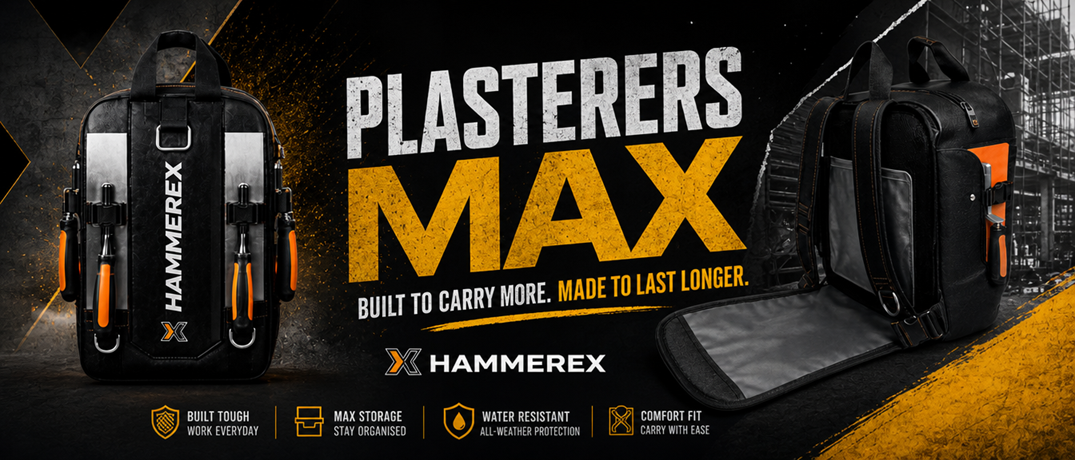
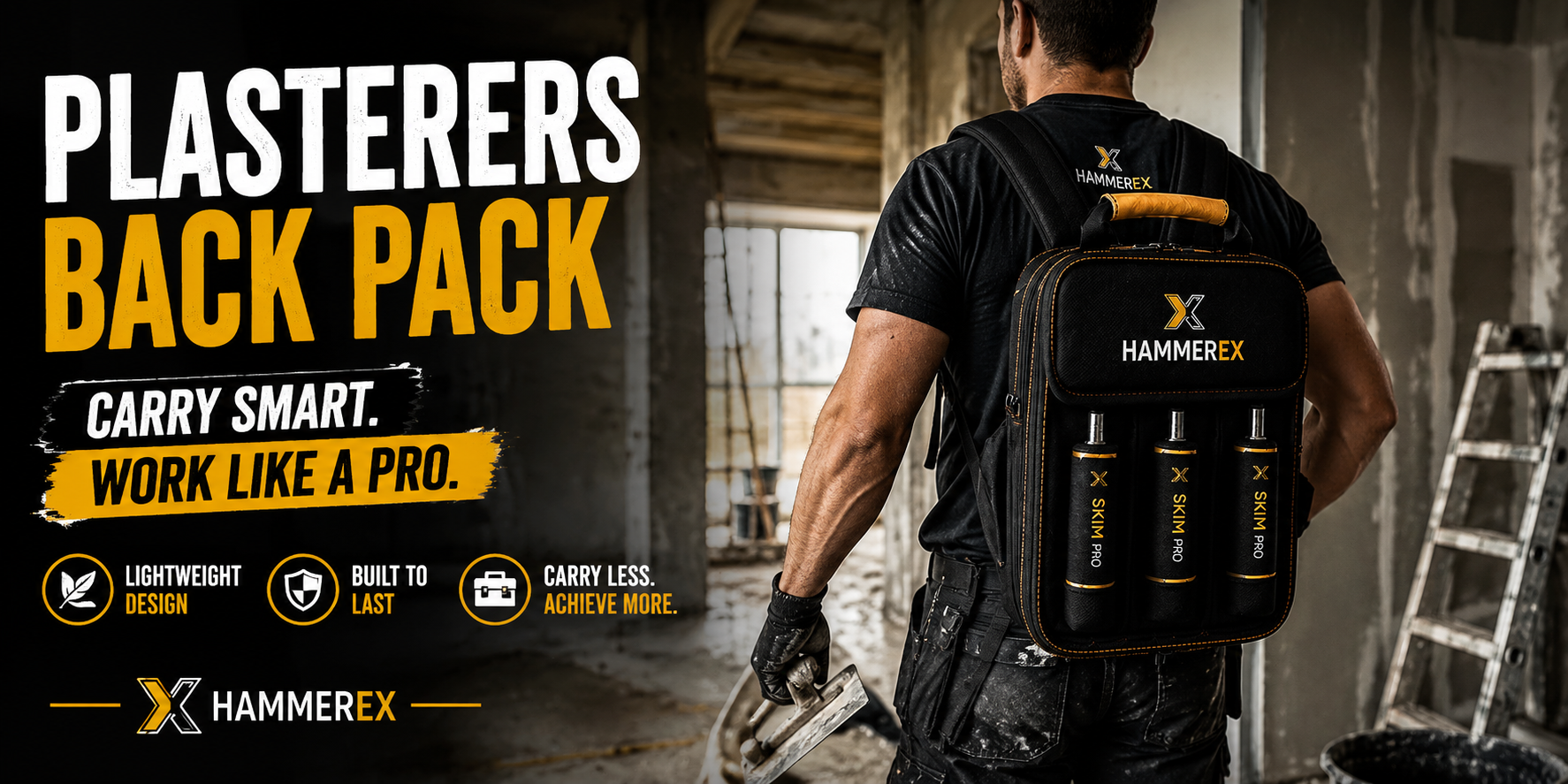
A plasterer who keeps his trowels clean and protected in a proper Plasterers Max Bag is usually paying attention to the finish on the wall.
A carpenter who sharpens and maintains his tools is usually paying attention to every cut.
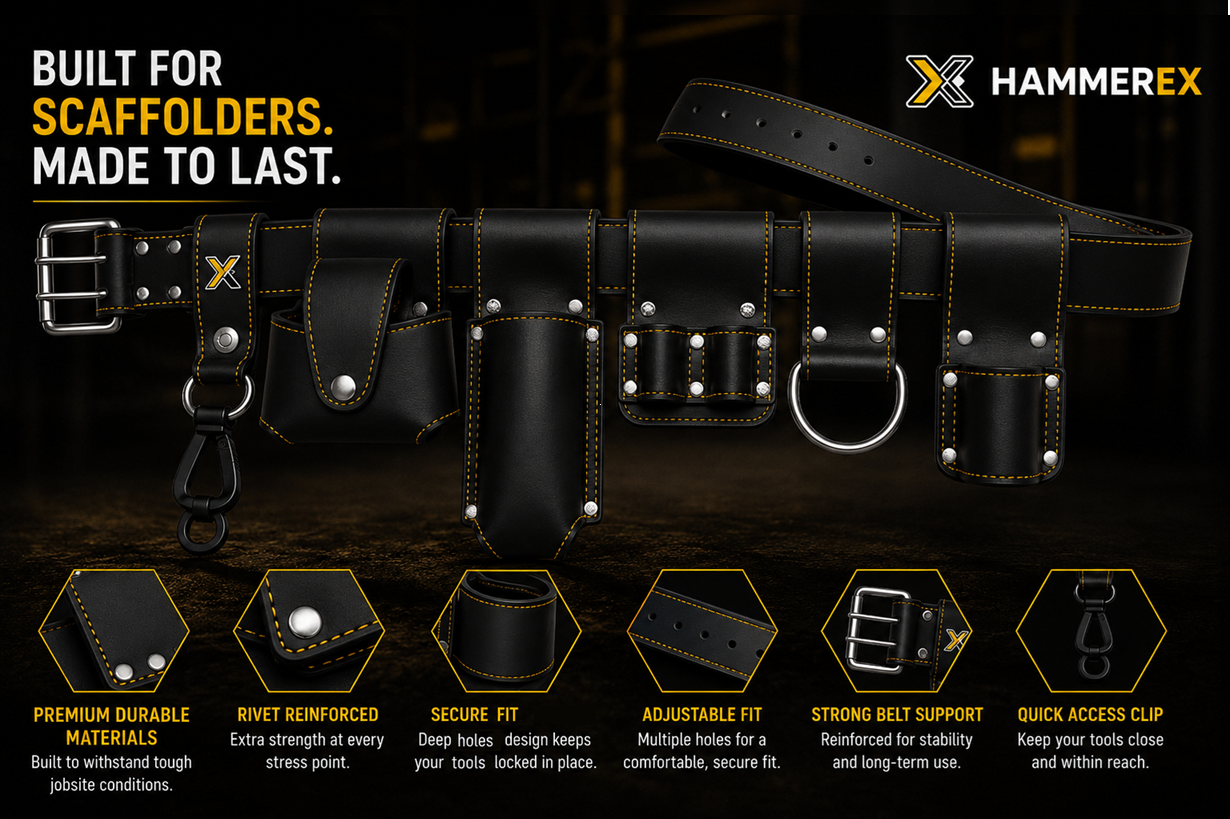
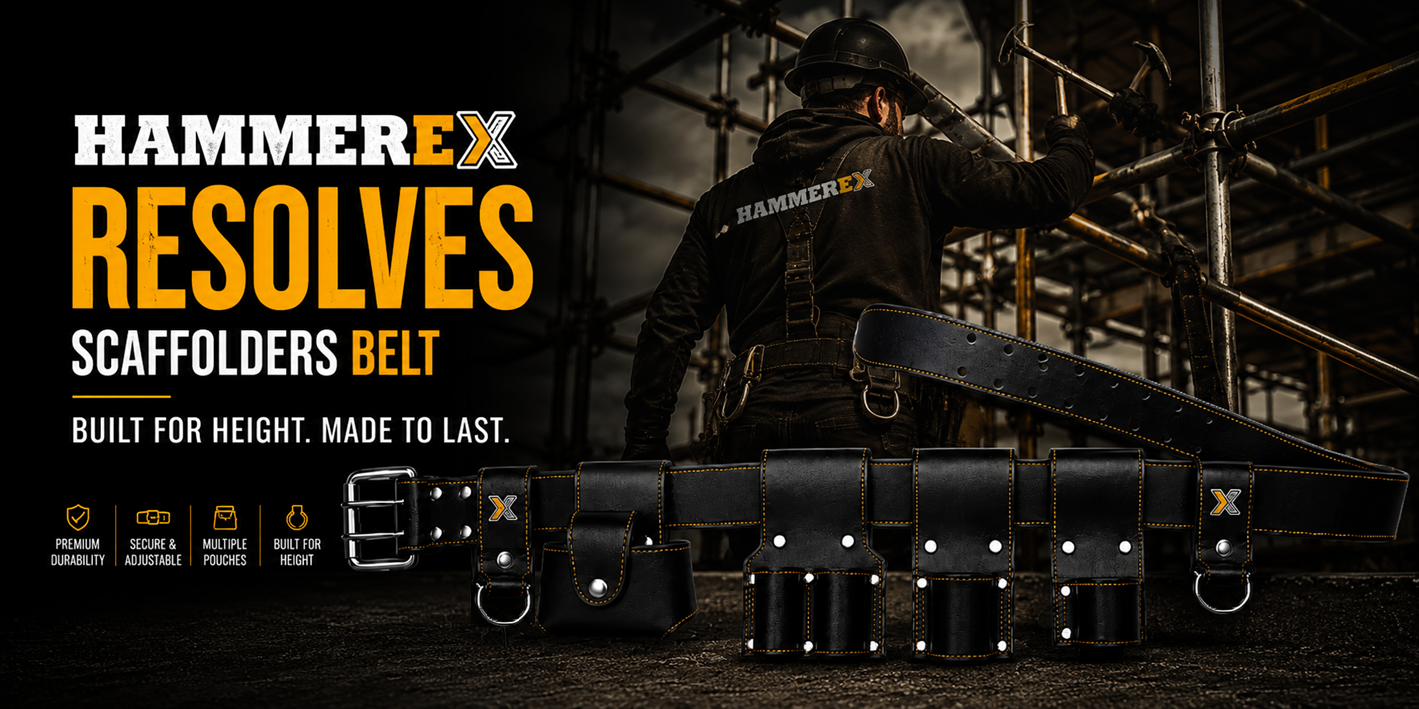
A scaffolder who knows where every spanner sits in his setup belt is not wasting time searching halfway through a build.
Speak to a plasterer with thirty years on the trowels and he can still tell you where every tool lives in his bag - without looking. That is not luck. That is a habit built over a career.
The standard you set for your tools often becomes the standard you set for your work.
Over time something changes.
The mindset shifts from:
That will do.
To:
That is not good enough.
Not because someone taught you to think that way, but because discipline naturally creates higher standards.
The Real Cost of Neglect
Most people only see the purchase price of a tool. They do not see the cost of poor habits.
Lost tools, damaged tools, worn tools - all of it adds up. The cheapest part is the replacement. The expensive part is the lost hours.
How many days have been blown apart by:
Has anyone seen my tape measure?
Where is my spanner?
Who moved my trowel?
Every minute hunting for equipment is a minute you are not working. Multiply that across a week, a month, a year, and you start to see the real cost.
The industry is slowly changing because tradesmen are beginning to understand that tool protection is not an expense. It is part of running efficiently.
Research Before You Buy
Another lesson that is not taught enough: research the right tool for the job.
Too often people buy the cheapest option available.
Sometimes that works. Often it does not.
The cheapest tool can become the most expensive tool if it fails halfway through a project, delivers a poor finish, or needs replacing every six months.
Before buying any tool, ask yourself:
- Is this the right tool for the project?
- Will it deliver the finish required?
- Can it withstand daily site use?
- How will I maintain it?
- How will I store and protect it?
Those questions matter just as much as the price tag.
Professional tradesmen do not simply buy tools. They invest in equipment that helps them produce quality work consistently - and they invest in carry systems that keep that equipment working at its best.
A Brief Word From Hammerex
Hammerex has been part of UK trades for fifteen years. We have watched this habit fade. That is the real reason we keep banging on about storage, holders, and proper carry. Not because we make them - though we do - but because we have watched too many talented tradesmen lose hours, money, and finish quality to disorganisation that could have been solved with five minutes at the end of each day.
The Environment Is Changing
For years, throwing tools into a bucket, a van, or a bag at the end of the day was normal.
It worked.
It became part of site culture.
But times are changing.
Tools are more specialised. Replacement costs are higher. Productivity matters more than ever.
Tradesmen are beginning to understand that protecting equipment is not about looking tidy. It is about reducing losses, improving efficiency, and maintaining standards.
When a pocket is empty, you know immediately something is missing.
When every tool has a place, finding it becomes automatic.
That organisation creates confidence.
Confidence creates speed.
Speed combined with quality creates professionals.
Pride Creates Quality
The biggest lesson of all is this:
Looking after your tools is not really about the tools.
It is about the person using them.
When you respect your equipment, you begin to respect the process.
When you respect the process, you pay attention to details.
When you pay attention to details, your quality improves.
And when your quality improves, your reputation grows.
All from a habit that takes only a few minutes at the end of each day.
Do This Tonight
Before you leave site, take five minutes:
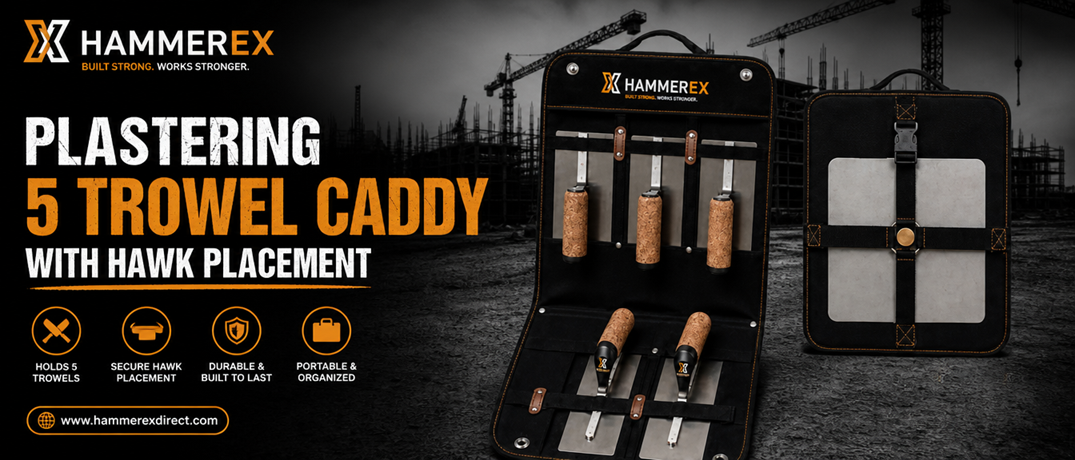
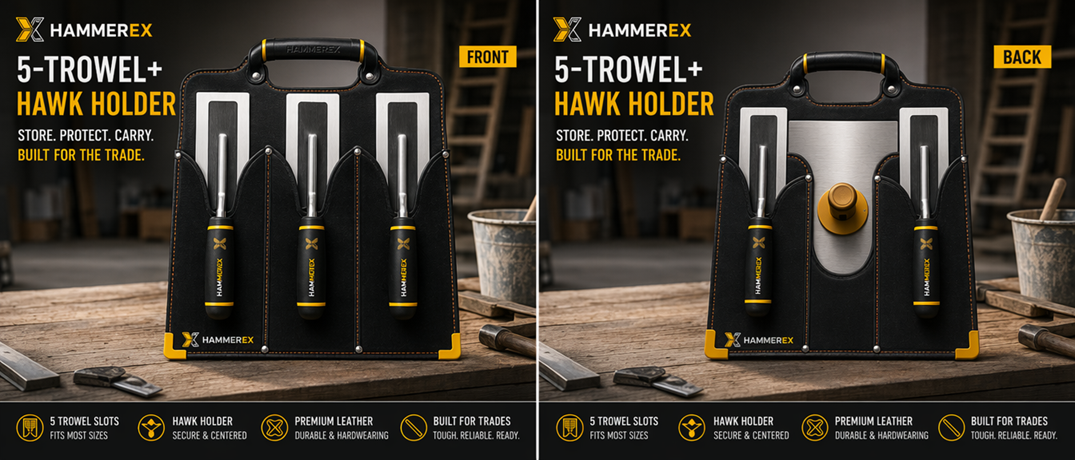
1. Clean. Wipe down trowels, blades, hawks - anything that touched material today. 2. Sort. Every tool back in its slot. An empty pocket means something is missing. 3. Store. Bag, holder, or belt - wherever it lives, that is where it goes. 4. Lay out for tomorrow. Future-you will thank present-you at 7am.
Five minutes. Every single day. That is the whole secret.
The next time you are the last one on site and everyone else has already left, take those extra few minutes.
Because the habit of looking after your tools is not about today.
It is about building the standards that define your trade for the rest of your career.
That is what separates a trade you do from a trade you are known for.