Hammerex Guide
How to choose pruning shears (a buyer's guide for UK gardeners)
Most pruning shears under £10 are made the same way — soft steel, no coating, a flimsy spring that fails inside a year. Spend a little more and the same tool lasts a decade. This guide explains what to look for, what to ignore, and when a £15 pair beats a £40 one.

Bypass vs anvil — pick this first
There are two cutting actions and they do different jobs.
Bypass shears work like scissors — two sharp blades slide past each other and slice the wood cleanly. The cut surface heals well and the plant carries on growing. Bypass is the right choice for anything alive — green shoots, rose stems, soft prunes, fruit-tree work.
Anvil shears have one sharp blade pressing onto a flat metal anvil. They crush rather than slice, which makes a messy cut on living wood (and stresses the plant) but works fine on dead wood you're just removing. Use anvil for dead, woody stems.
If you only buy one pair, buy bypass. Most home and professional gardeners only ever need bypass — dead-wood removal happens rarely enough that a hand-saw covers it.
The blade steel decides how long it lasts
This is where cheap shears fall apart. A £6 pair from a supermarket uses unspecified mild steel that rolls or chips on the first hard cut, dulls within a season, and can't be sharpened back to a working edge.
Look for these on the spec sheet:
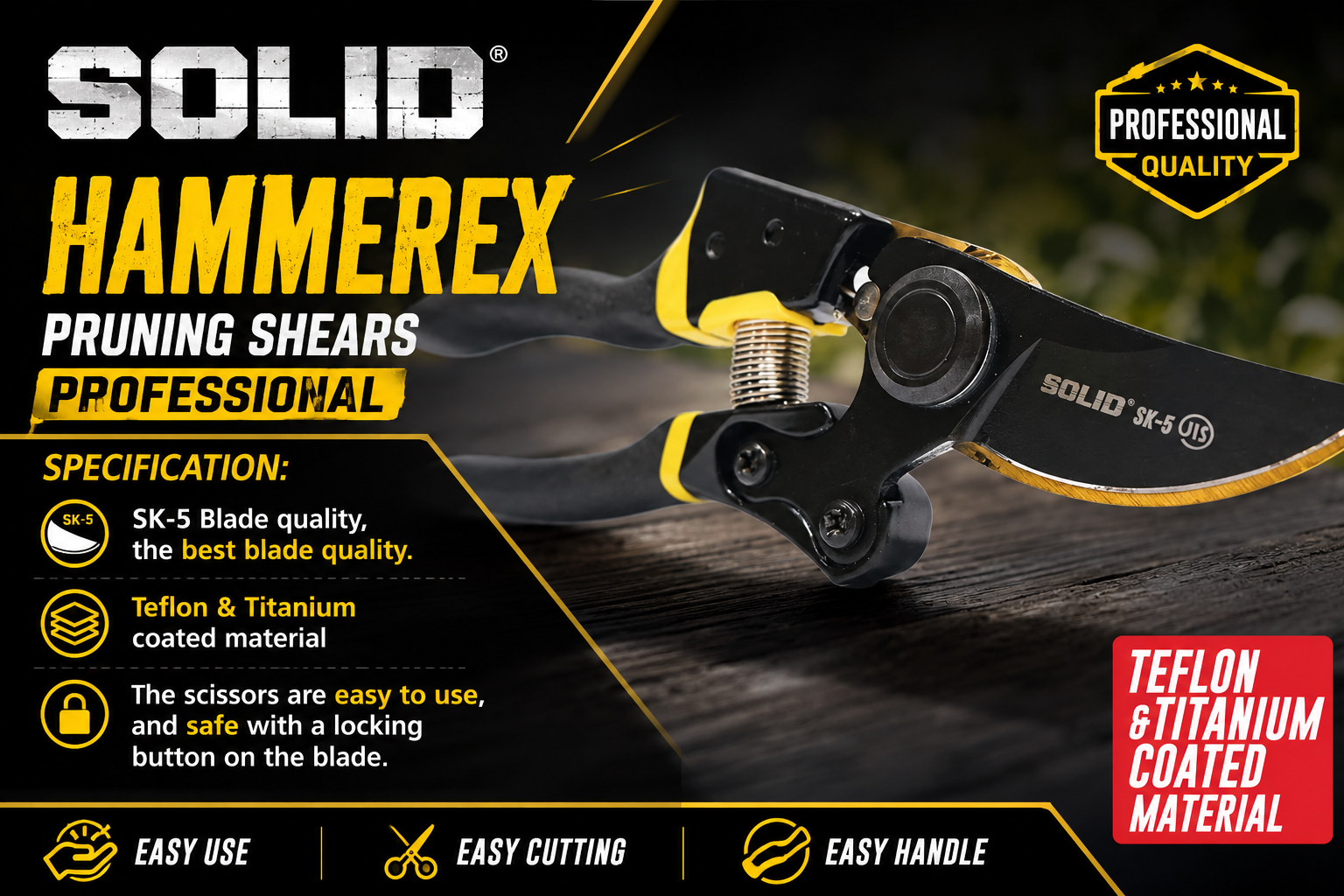
- SK-5 high-carbon tool steel — the standard for professional Japanese-style blades. Holds an edge for years, sharpens cleanly with a diamond file. The Hammerex 8" Professional Pruning Shears use SK-5.
- SK-2 / similar carbon tool steels — also good, slightly softer than SK-5.
- "Stainless steel" with no further detail — usually a soft 420-grade stainless. Avoid for anything beyond very light work.
- "Hardened steel" — marketing word, tells you nothing.
Teflon coating is not a gimmick
The single biggest annoyance with pruning shears is sap build-up. A pair of un-coated steel blades becomes sticky and stiff after an hour of pruning anything resinous. A Teflon (PTFE) coating on the blade does two things: it stops sap adhering, and it reduces friction so each cut takes less hand strength.
If you're going to use the shears for more than 15 minutes at a stretch, coated blades save your hands and your tempo. Uncoated is fine for occasional snipping.
Blade size — 8 inches is the professional standard
The overall length you'll see in the spec is the closed-blade length, measured tip-to-handle.
- 6.5" — small, light, fine work. Right for delicate cuts and small hands. Not enough leverage on harder wood.
- 8" — the professional standard. Enough leverage for most live-wood cuts up to ~22 mm diameter, balanced size for full-day comfort.
- 9–10" — for hardier cuts or larger users. Heavier in the hand, less precise on small stems.
For most gardeners doing a mix of soft growth and small branches, 8 inches is the right pair.
Handle ergonomics matter more than people think
A pruning session is hundreds of squeeze-release cycles. Cheap shears use flat plastic handles that hot-spot the palm and bruise the side of the index finger within 30 minutes. The features that matter:
- Soft rubber or TPE-overmoulded grip — diffuses pressure across the palm.
- Spring assist — the spring opens the blade for you so each cycle is a squeeze only, not a squeeze-and-pull.
- Safety lock — a thumb-flick catch that holds the blade closed in storage, transit, or in a pocket. Non-negotiable for site bags and toolboxes.
How much should you spend?
For a UK home gardener doing two to three pruning sessions a year, a £15 pair of SK-5 + Teflon + spring + lock outlives three or four £6 pairs. Real cost per cut is far lower.
For a professional landscaper or allotment-holder doing weekly work, £15–£20 is the value sweet spot — buys you the right steel and the right ergonomics. The £40+ Felco premium is genuinely better but the marginal lift over a good £15–£20 pair is small for most users.
What to skip
- Anything marked "garden shears" rather than "pruning shears" — those are hedge shears, a different tool.
- Multi-tool combos that include scissors / saws — none of the three tools are good.
- Pretty colours over spec.
Quick recap
Bypass blade, SK-5 steel, Teflon coating, spring assist, safety lock, 8 inches, soft-grip handle. That is the spec sheet that lasts ten years.
The Hammerex 8" Professional Pruning Shears tick every box on that list at £14.99 — which is exactly why we built them.